Why Some Live Dealer Tables Carry a Bet Behind Feature
Some live dealer tables in Australia carry a second wager that many players never quite notice. It sits behind the primary bet at your seat, settles under its own rule, and often stays on the table across several rounds. Studios label it variously as a bet behind, a back stake or a behind-the-bet option, and it turns an ordinary blackjack or baccarat seat into something with considerably more going on.
The attraction is obvious enough: one extra chip for a larger return. The reality is more interesting than the marketing, because the feature exists to solve a production problem as much as a gaming one. Understanding why it appears, how it is handled on camera and what it does to the length of a session makes it much easier to decide whether it belongs in your game.
What the bet behind feature actually is
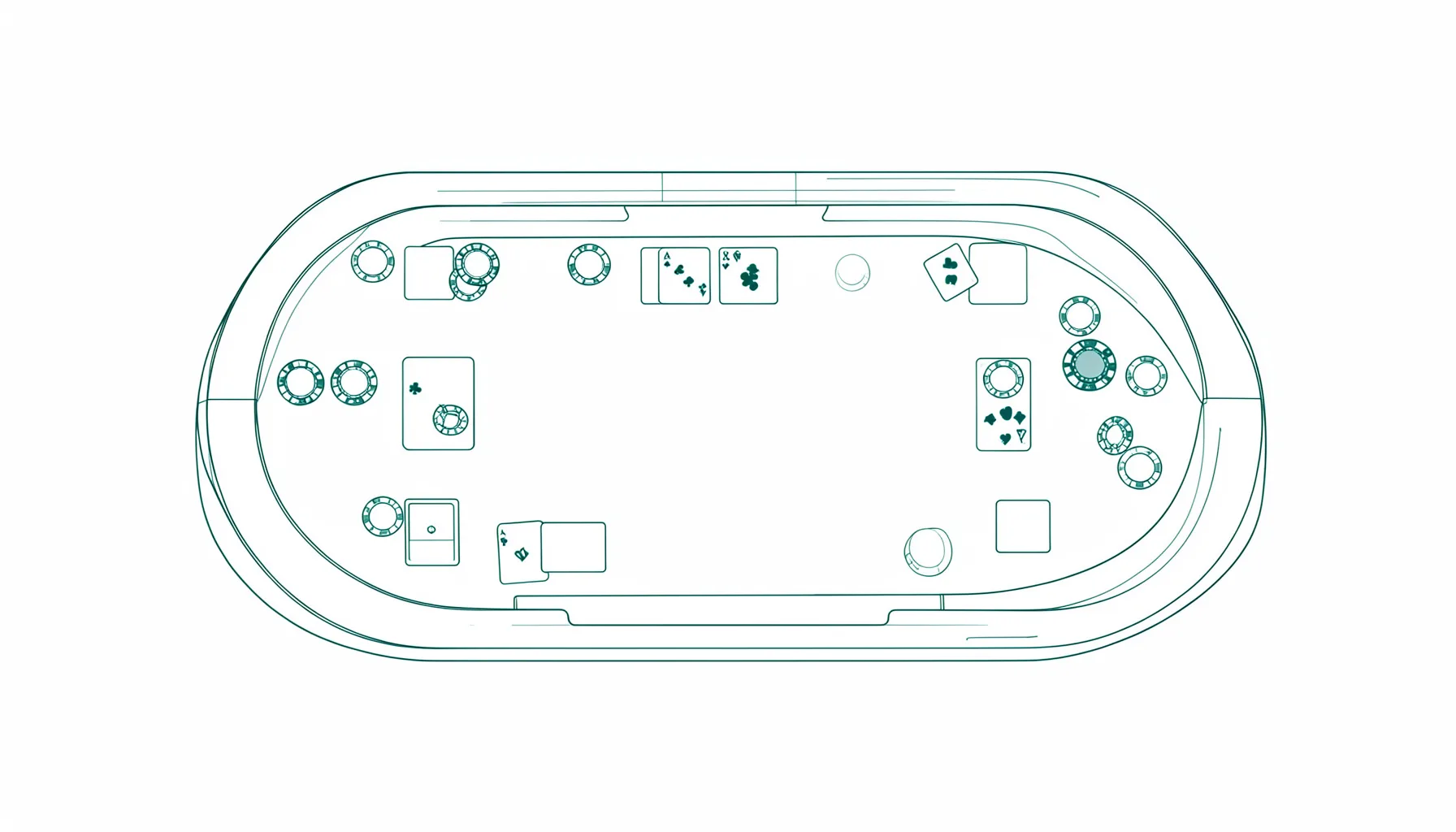
Unlike a standard side bet, which is dropped onto a printed betting grid, a behind-the-bet stake is placed at the rear of your main wager, closer to the seat edge. In a blackjack studio you will often see a separate printed card for it, sometimes with its own chip tray. When your main bet wins, the extra stake follows a different condition — a dealer bust, a particular pair, a third card outcome — and pays according to its own printed schedule.
Variants differ by game. Blackjack implementations are usually insurance-style, settling when the dealer shows blackjack or busts, while some studios allow the stake to ride only on the following hand. Baccarat versions cover banker and player pairs or the third-card position. Roulette formats occasionally offer a neighbouring-number stake, and game-show tables tend to attach the extra wager to a prop bet in the middle of the round.
The important part is that it is entirely optional. Leaving the position empty costs nothing, and many players sit behind the stake for a session without ever touching it. Once a chip is placed, however, it usually persists until you remove it, which is precisely why the feature rewards a clear head before you start rather than a quick tap of the screen.
How it is built into the studio and the stream
Everything on a live table is staged so the camera can read it. Dealers work from a purpose-built console with fixed positions for chips, cards and side wagers, and a floor supervisor confirms the layout before the feed goes live. That supervisory role is often called a pit boss, and the pit boss explained covers how the off-camera supervisor manages game pace, settles disputes and keeps the broadcast running smoothly.
In the studio, the behind-the-bet position usually has its own printed graphic and colour code so the dealer can identify it instantly. On screen, the same idea is rendered as a digital token beside your main bet, which means the interface has to make two wagers legible at once on a small phone display. That readability requirement is one of the main technical reasons the feature exists at all: it lets a table offer extra betting interest without cluttering the grid that everyone else reads.
Latency, overlays and mobile play
Live tables run on a fixed camera, a physical shuffle or a certified random number generator, and an overlay system that mirrors the real chips. The extra stake is registered in that overlay, so it appears and disappears with the same timing as your main wager. Because the feed travels across distance, there is always a short delay between the dealer's action and what you see, and studio software compensates by pausing the dealer's window rather than rushing the outcome.
For Australian players, that technical picture matters more than it might elsewhere. A great many sessions here happen on a phone, whether that is on a train through Sydney, a tram in Adelaide or a break in the Melbourne CBD, and the network handover between towers can add a flicker to the stream. Modern 4G and 5G coverage handles most tables cleanly, but a stable connection and an up-to-date browser matter more when you are chasing a wager that settles mid-round.
Screen space is the other constraint. The behind-the-bet chip is small, so operators who design well place it directly behind the main stack and label it clearly. On a five-inch handset that still requires attention, which is a good reason to keep the feature switched off until you are comfortable with the pace of the game.
Why the Australian market carries an extra wager
Australia has a long relationship with table games, and live dealer studios sit both inside venue floors and online. Crown properties in Melbourne and Perth run broadcast-quality tables, The Star in Sydney operates a substantial live floor, and regulated internet casinos are licensed in New South Wales and Victoria, with NSW Lotteries overseeing the local online market. Because wagering is restricted to over-18s and monitored through AUSTRAC, the online sites serving Australians tend to be conservative about who they let through the door.
Baccarat in particular has a strong following here, and its side-bet culture is well developed. If you play it, punto banca betting strategies give a useful sense of how the banker and player positions behave over a run, which is helpful context for any extra stake you take on the table.
Money is handled in Australian dollars, and the 10 per cent GST on gambling services sits inside the operator's costs, so it is never itemised on your screen. Practical differences come down to state rules and venue tax, and the practical realities of the market come down to something simpler: players want more action per hand, and a behind-the-bet option delivers that without changing the core rules of the game.
Bankroll, pace and the psychology of a punt
Australians have a comfortable word for a single bet — a punt — and the culture around it is friendly rather than precious, whether it happens at the pokies in a suburban pub or on a live table. A session often runs alongside the footy on a Saturday night, with the game in the background and a modest stake running between the quarters.
That habit is where the behind-the-bet feature does most of its damage. A secondary stake that renews automatically feels cheap, and because it is small it escapes notice, yet over an hour of play it can quietly consume a slice of the bankroll you had set aside for the main game. The maths is unforgiving: a stake paying double the odds needs to win far more often than half the time just to stand still.
The same caution applies to the main wager. Live blackjack moves quickly, roulette spins keep a rhythm that invites repetition, and baccarat can produce a long run of the same result that encourages doubling up. None of those behaviours are clever; they are simply momentum doing the talking. Setting a fixed amount before the first hand and stopping when it is gone keeps a session honest, and leaving the extra position empty until you have read the rules on that particular table is the easiest discipline of all.
Choosing tables and keeping control
Start with the rules, not the graphics. Every studio prints its own payout schedule for the behind-the-bet option, and two tables with identical blackjack rules can pay quite differently on that secondary stake. Check the minimum and maximum for the position, work out what a single win is actually worth, and notice whether the stake carries over to the next hand. Tables with lower limits are often the more forgiving place to test the feature.
Second, judge the table by the dealer and the pace rather than by the promotional banner. A dealer who pauses to acknowledge a win creates a comfortable rhythm, while a rushed game compresses every decision. Live tables often show a recent results board, which is useful for pacing yourself but useless for predicting the next hand.
Third, keep your records. Session logs, deposit and withdrawal history and the time you spend at a table are all useful, and reading the privacy policy before you register tells you exactly how that data is stored and shared. That matters in Australia, where licensed operators must meet identification and anti-money-laundering standards and are required to be transparent about what they hold.
Finally, treat the behind-the-bet stake as an occasional experiment rather than a standing commitment. Turn it on for one hand, watch how it settles, then decide. Used that way, it adds a small layer of interest to a live table. Left running on autopilot through a long session, it quietly takes money that was meant for the game itself.