How Live Dealers Shuffle Cards in Real-Time Blackjack
Nothing else in a live casino game exposes the machinery quite like the shuffle. In streamed blackjack, a real dealer sits under studio lights, pulls real cards from a real shoe and turns them over on camera — and between shoes, that same dealer squares up the deck and randomises it in full view of anyone watching. That short ritual is where the fairness of the game is either built or quietly undermined, and it is the part of a session that careful players actually study.
Because studios operate around the clock from locations across Europe and Asia, the tables reaching Australian screens can differ in format, in shoe size and in shuffle protocol depending on the hour, the provider and the jurisdiction the studio is licensed in. What follows is how the physical shuffle works in live blackjack, why cameras are pointed at it, and what you can reasonably conclude from watching it.
The Ritual That Opens Every Shoe
Every live blackjack table begins with a shoe rather than a loose hand of cards. The dealer receives one or several sealed packs, breaks them open, squares the stack and shuffles it. In some studios the shuffle happens right on the felt in front of the camera; in others it takes place off-camera and only the final squaring-up is shown. The dealer then loads the cards into a dealing shoe — a long plastic or metal holder with a chute at the front — and taps the shoe so the top card rests against the window, ready for the first bet of the round.
A cut usually follows. In a land-based casino, the dealer invites a player to slice the deck with a small plastic tool and slide the top portion under the bottom. The streamed equivalent keeps the ritual: a cut card, often a bright yellow plastic marker, is placed in the discard tray so viewers can see exactly how deep the cut went. A cut does not randomise anything; it repositions the stack. Its value is procedural and psychological, giving the impression that the sequence has been broken.
Some formats also burn a card, dropping one face down into the discard tray before dealing begins. It is a leftover from the physical game, designed to prevent marked cards from being spotted, and live streams often skip it for pace. Where it does exist, the burned card tells you very little about the cards that follow.
Hand Shuffles Versus Machine Shuffles
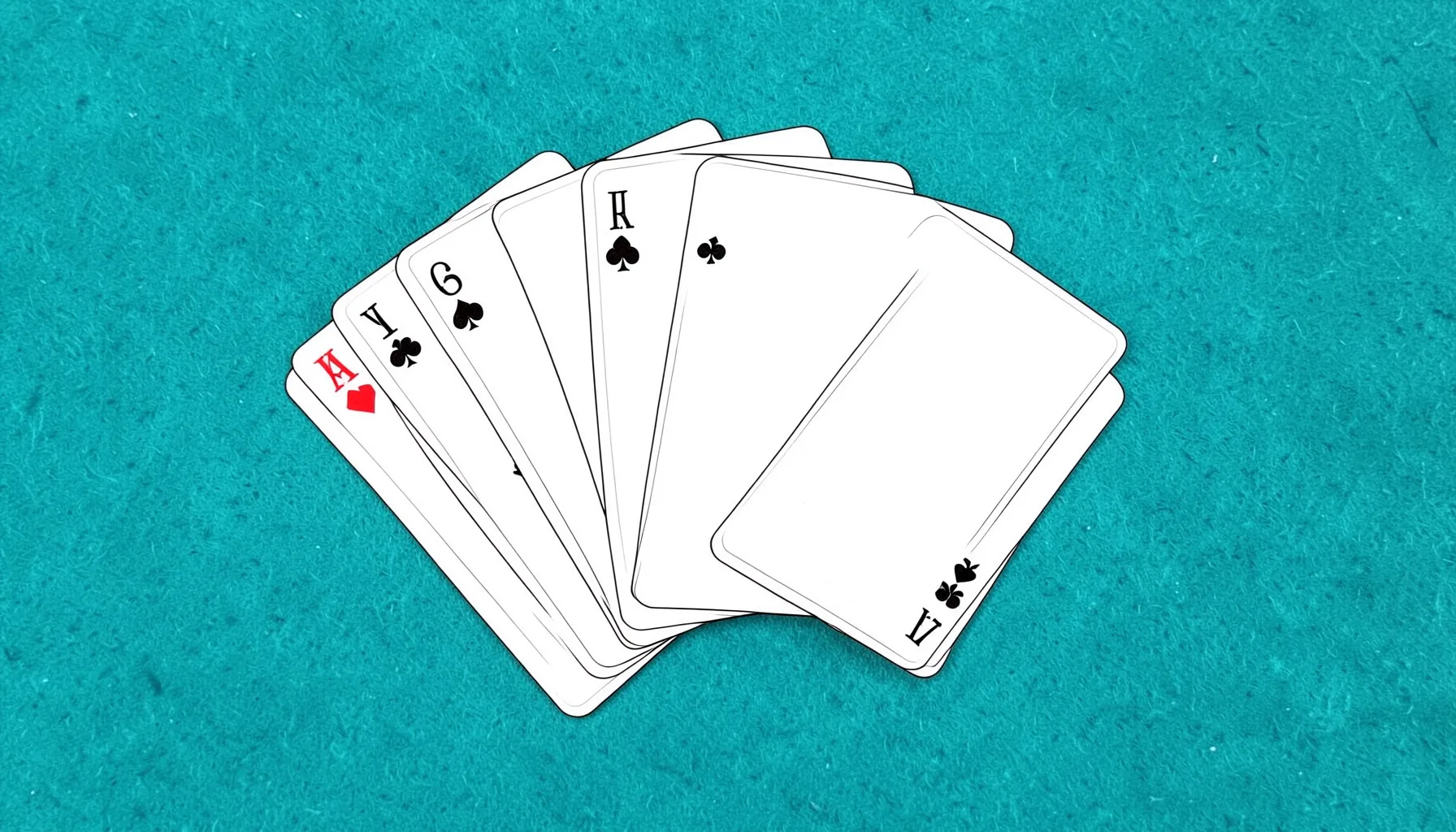
Casinos have used several techniques to randomise a deck, and live studios use most of them. The classic riffle shuffle splits the deck into two halves and interleaves them with a bend and a release, producing a genuinely mixed sequence that human eyes struggle to predict. The overhand shuffle drops small packets of cards from one hand to the other; it is quicker but less thorough, and it is the method most likely to leave visible order behind. Both remain common in televised games because the movement reads well on camera.
Automated shufflers handle the heavy lifting in busy studios. A machine splits the deck into batches, feeds them through a mechanism that jumbles and reassembles them, then delivers a squared stack back to the dealer, who spreads the cards across the green baize and squares them with a final pat. The randomness inside these machines comes from a hardware random number generator, which turns the shuffle into a fixed mechanical procedure rather than a judgement call. Studios that rely on machines usually film the process from above; studios favouring hand shuffles tend to frame the action at table level, where the interleaving is easier to read.
Why the Overhead Camera Is Pointed at the Felt
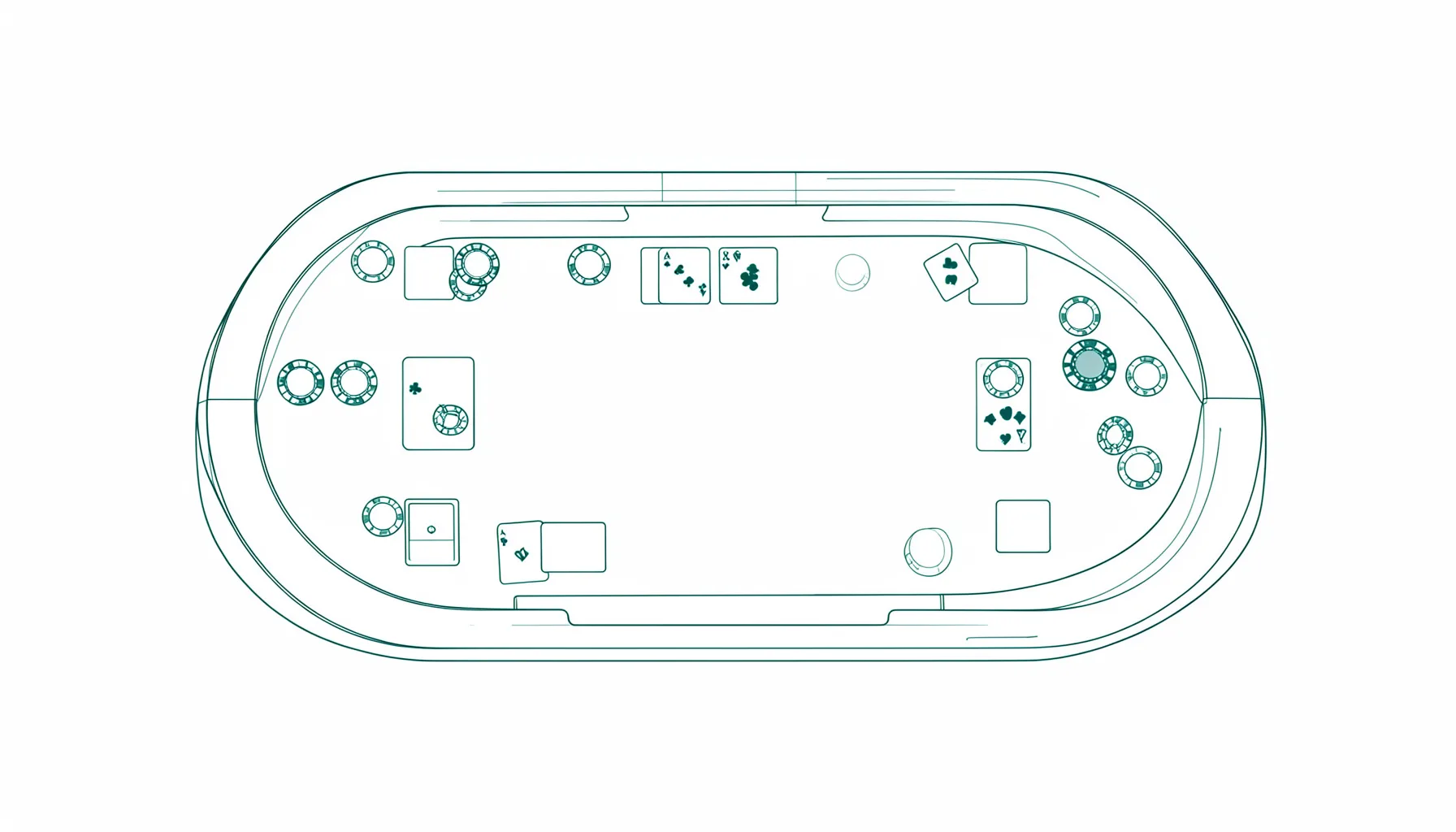
The camera rig is the real reason the shuffle is worth watching. A top-down view of the hands, the shoe and the discard tray reveals what the table-level angle hides: whether the riffle actually interleaved the halves, whether the machine was loaded with a full deck, and whether the cut landed somewhere plausible. Many providers add a dedicated shuffle camera that activates for a few seconds between shoes before returning to the main dealer feed.
That scrutiny has a practical consequence for anyone counting cards. A poorly randomised deck leaves sequences that can be exploited, and someone watching dozens of hours of shoe changes can occasionally spot the tell before the round results do. The shuffle is therefore not decoration. It is the mechanism that decides whether pattern-based advantage exists at all.
Shoes, Penetration and the Shuffle Point
Live blackjack rarely deals from a single 52-card deck. Most tables use six or eight decks loaded into one shoe, while a smaller number of streams run a double-deck or single-deck format with a shoe that holds the entire game. The number of decks changes how long a shoe lasts, and the share of the packs dealt before the reshuffle — usually somewhere between half and three-quarters — is called penetration.
A cut card signals the end of the shoe. When the dealer exposes it, the round is finished and the shuffle follows immediately, so the reshuffle lands at a fixed, predictable moment rather than an arbitrary one. Operators who wanted to frustrate counters would shuffle at unpredictable intervals; operators who want brisk, frequent action reshuffle on a timer instead. Either way, the shuffle point is something players can mark, and plenty of them keep personal notes on how many hands each shoe produced before the cut card appeared.
Who Is Actually Checking the Work
Dealers do not run a studio floor alone. A floor supervisor or pit boss handles the wider table, watches the shoe and the chips, settles disputes and enforces house rules, and is the person responsible for making sure the shuffle procedure is followed rather than improvised. That authority is often invisible to the audience because the stream cuts to the dealer, but the oversight is what links the physical game to the recorded one. It pays to understand how pit boss oversight works before drawing conclusions about who polices what.
Randomness claims in the wider industry are also written down rather than assumed. Certification bodies such as Gaming Laboratories International and eCOGRA audit the random number generators used in digital games, and Australian operators must work within the Interactive Gambling Act 2001 and the licensing rules of each state, with an 18-plus age requirement enforced at verification. Victorian and NSW regulators handle the local side of that regime.
What Other Tables Reveal About the Same Shoes
Baccarat and roulette tables are built from the same components, and watching them clarifies how blackjack shoes behave. Roulette never shuffles a deck at all: the wheel is spun, the ball is dropped, and the only randomiser is the physical motion of the wheel itself. Baccarat runs an eight-deck shoe with a burn card, deals cards in a fixed, repetitive pattern and therefore gives observant players a way of reading the shoe before a round starts. The habit is documented well in baccarat scorecard habits, and the logic transfers to blackjack, where players track the cut card, the depth of the shoe and previous hands for similar reasons.
The Australian market adds a few wrinkles worth keeping in mind. Physical venues such as Crown Melbourne and The Star Sydney run their own blackjack floors with exactly these procedures, and many online live tables are modelled on them. New South Wales has tightened broadcast advertising rules around wagering products, one reason so many Australian punters now find offshore brands in app stores rather than on free-to-air television. Session timing follows Australian time zones, so the late-night and early-morning European feeds are the ones that land during the Melbourne Cup carnival or the run-up to the AFL Grand Final. And since a lot of play happens on the tram, at the desk or in a checkout queue, mobile data stability matters as much as screen size.
Set side by side, the common approaches look like this:
| Method |
How randomness is created |
What appears on camera |
What it means for players |
| Riffle hand shuffle |
Dealer interleaves two halves by hand |
Table-level view of the bend and release |
Genuinely mixed, but the weak link for counters |
| Overhand hand shuffle |
Small packets dropped hand to hand |
Quick hand movement, cards rarely fully visible |
Faster, less thorough, more likely to leave order behind |
| Automated shuffler |
Hardware random number generator jumbles and reassembles batches |
Overhead shuffle camera shows loading and reassembly |
Consistent procedure, identical every shoe |
| Burn card |
One card discarded before dealing |
Visible in the discard tray where the format uses one |
Minor effect; mostly a legacy security step |
| Cut card |
Dealer or player slices the stack |
Yellow marker placed in the discard tray |
Repositions only, breaking sequences without randomising |
| Single or double-deck shoe |
Whole shoe randomised at once |
Full shuffle before the first hand |
Short shoe, fewer hands, reshuffle comes quickly |
| Multi-deck shoe, six or eight |
Randomised at each shoe change |
Shuffle follows the cut card at the shuffle point |
Penetration and shoe length decide how much you can track |