How Live Casino Studios Film Blackjack with Multiple Angles
A live blackjack table looks deceptively simple: green baize, a shoe of plastic cards, a dealer in a waistcoat, a glowing screen mounted on the wall behind her. What the camera never shows is the compact production crew behind the felt, the rows of softboxes overhead, the sound desk balancing card sounds against the pit boss's commentary, and the vision mixer where someone decides, second by second, which angle reaches the audience.
Multi-camera coverage is the reason a streamed table feels like a room rather than a widget. The overhead shot lets you follow every chip into the betting circle. A tight camera on the shoe shows the burn card and the next card sliding out. A camera behind the dealer catches her expressions when a player holds 16 against a dealer 10. A low camera over the player's shoulder restores the eye-line that a single top-down feed would flatten completely.
Most live dealer studios run on a similar skeleton: two or three tables in a soundproofed warehouse, a technical gallery on the mezzanine, and a control room full of monitors. The set is dressed with panels, foliage and branded graphics, but the operational heart is a fibre backbone, redundant encoders and a rack of recording and streaming hardware that must survive an entire shift without dropping a frame.
For players, this machinery explains a lot. It explains why the deal pauses as the camera settles on the betting circle before the cards are dealt, why the dealer sometimes glances at a monitor mounted out of shot, and why a table appears to "lose" the stream for half a second when a new hand begins. Understanding the production side makes the session easier to read, especially for newcomers who are still working out the pace.
Inside the studio: the blackjack set
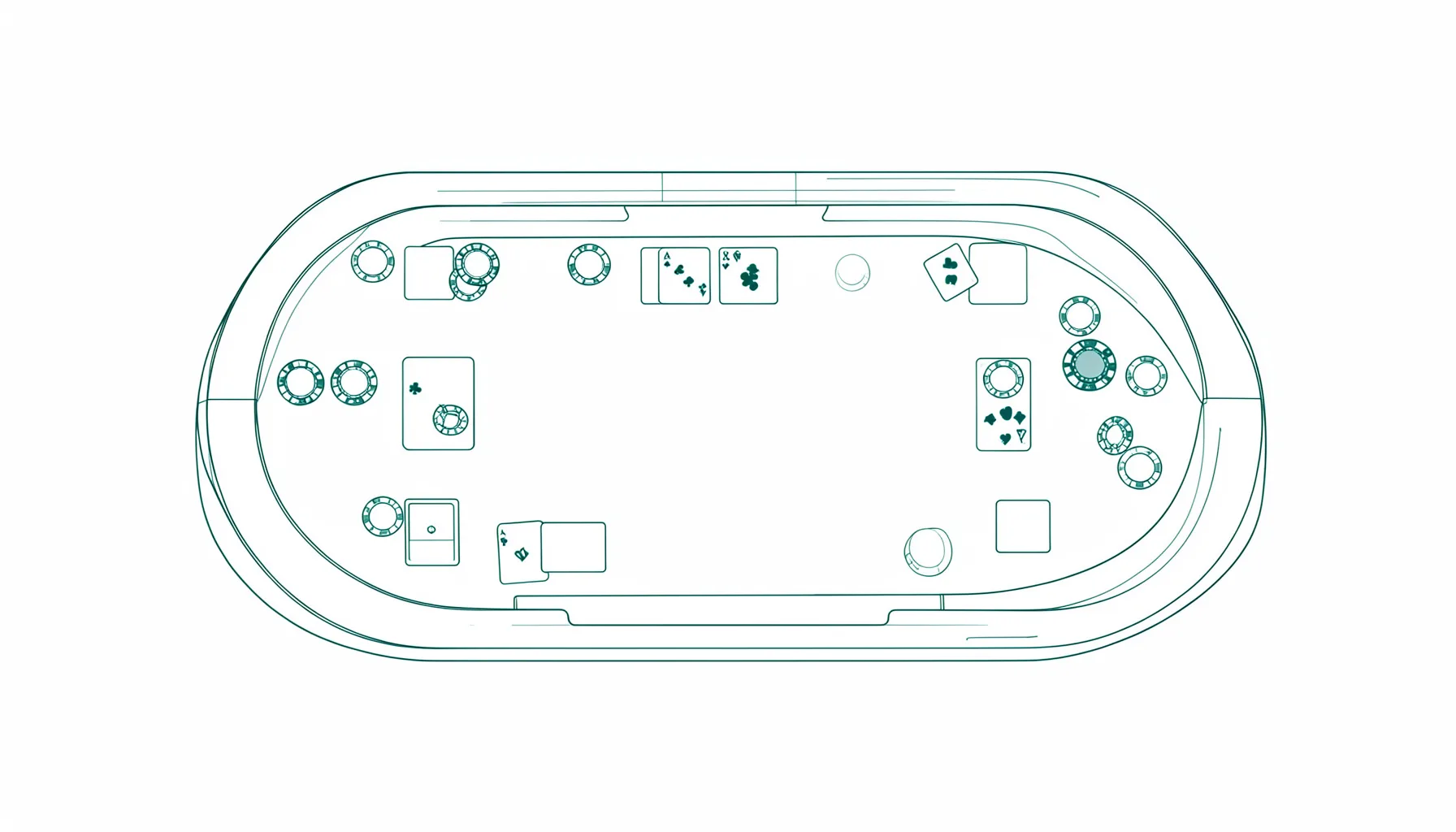
Studios treat the blackjack table like a small television set. The dealer stands or sits at a curved desk fitted with a shoe, a discard tray and a card shoe sensor, while the betting circle and chip stacks sit on a semicircular layout of baize that has to be visible from above. The physical geometry dictates the camera plan: if you want to see chips, cards and the dealer's hands in one frame, the camera has to be directly overhead and close enough to avoid wide-angle distortion across the curve.
Around that core sit four recurring positions. The overhead table camera gives the cleanest read of the hand, the card cam gives detail on the shoe and the dealing sequence, the dealer's camera supplies personality and live commentary, and a player-side camera replicates the view of someone actually sitting at the table. Some tables add a fifth feed for side bets or a dedicated shot of the big screen used for timeouts and hand histories.
Because the set is shared, the studio can move between tables without re-lighting. A single boom microphone, a pair of room mics and a comms channel let the dealer speak to the pit boss while the sound desk keeps table noise audible but controlled. Studio operators often describe the ideal table as one where a viewer can hear the shuffle, the slide of a plastic card and the tap of a chip on green, because those small sounds carry a surprising amount of the session's tension.
Overhead, card cam and the dealer's station
The overhead camera is the workhorse. Mounted on a ceiling drop or a jib, it looks straight down at the betting circle so players can verify placement, count stacks and follow the card sequence without guessing. Card suits and ranks need to be legible at typical stream resolutions, which means the lens is chosen for a tight, distortion-free field of view rather than a wide dramatic look. Some studios use a zoomable camera and let the vision mixer push in during a reveal.
The card cam sits lower, often on an articulated arm near the shoe, framing the dealing sequence in profile. This angle solves a problem the overhead cannot: it shows the actual shuffle, the burn card and the way the dealer taps the shoe, all of which build confidence in a game where trust matters. Roulette and baccarat tables in the same studio reuse similar hardware, so a technically experienced crew can rotate between formats without relearning an entirely different camera plan.
The dealer's camera sits at eye level and is deliberately framed to include the dealer's face, hands and the table edge in a single shot. When the dealer reacts to a blackjack or apologises after a misdeal, viewers see the human moment that a top-down feed would reduce to moving rectangles. A fourth camera, mounted behind the player position, produces the "your seat" perspective used during certain promotions and for the hand-replay packages some studios show between rounds.
Switching angles in real time
The live switching happens on a vision mixer operated from the gallery, and the pattern follows the rhythm of the hand rather than any fixed schedule. During the betting window the feed often rests on the overhead so the action in the circle is visible. At the deal, the mixer may cut to the card cam. On the reveal it holds wide to capture both the dealer's hands and the player positions, then returns to overhead for the payout.
This is a live decision, not an automated one. The switcher knows the hand state, the promotional schedule and which cameras are free, and will hold a wide shot for a natural pause in conversation or cut tighter when a player hits. Sponsors and side-bar graphics occupy a layer above the video, so the camera framing must leave space for a balance panel or a chat column without cropping the betting circle.
Latency runs from capture through the encoder, across the distributor's network, into the player's device, and the industry target is usually a fraction of a second for the main stream. That tiny delay matters more than it sounds: the dealer's decision to draw a third card is made on a physical signal from the shoe, and the software has already locked the outcome. Well-run studios add redundancy, monitoring every encoder and switching to a backup path within seconds if a primary feed stutters.
Lighting, sound and mobile screens
Lighting is the detail that separates a convincing live table from a flat webcam stream. Studios use diffused key lights over the baize so chips and cards stay readable without glare, then fill from the sides to soften shadows on the dealer's face. Colour temperature is kept warm and consistent, and the wall graphics behind the dealer are dimmed so they read as texture rather than competing with the table.
Sound receives almost as much attention. The table mic captures the rattle of the chip tray, and the mix desk lifts those sounds during the deal, then drops them for the dealer's commentary. Ventilation and air conditioning are usually the first things engineers tune out, since a low hum under a long session is the most common complaint players report.
Mobile is where the multi-camera plan meets a practical constraint. Australian players often watch on a phone held in portrait or on a small tablet, and the overhead shot that works beautifully on a wide monitor can crop badly on a narrow screen. Responsive layouts therefore favour a tighter vertical crop of the table, and some studios add a second, simplified camera feed specifically for mobile players. When checking a mobile session, look for the small card and chip detail still readable without zooming, and test on the mobile data connection rather than home Wi-Fi if you plan to play on the move.
What Australian players notice at the table
Regulation shapes the local market in ways overseas visitors sometimes miss. Since the Interactive Gambling Act 2001, the Australian Communications and Media Authority has pursued offshore operators that target Australian customers without a local licence, and many international sites geo-block or restrict play from the country. Operators that do serve Australian players under a local licence advertise the fact prominently, and players learn to check that registration before depositing a cent.
Time zones work in the players' favour. A table that opens at 8pm in Manila or Kuala Lumpur lands in the early evening in Sydney and Melbourne, which fits neatly after a workday and a commute home. Brisbane and Adelaide sit a little further back, while Perth's late start suits players who enjoy a table after dinner and the evening news. Weekend afternoons in Sydney are busy, and late-night sessions in Melbourne often run past midnight local time.
Betting habits differ too. Australian players tend to stake in whole dollars, often in $2, $5 or $10 increments, and to keep smaller bankrolls than the high-limit tables they watch on television. The overhead camera rewards that style, because a modest chip stack is easy to count in the circle when the framing is clean. Households across Melbourne, Brisbane and Adelaide increasingly rely on NBN fibre rather than older copper lines, which has improved stream stability considerably, though congested mobile networks during a busy Saturday afternoon can still interrupt a hand.
Everyday habits matter as much as the hardware. Many Australians have a local RSL club or pub hosting pokies within twenty minutes of home, so a live blackjack session competes with a familiar habit rather than an exotic one. Players tend to favour shorter, focused sessions rather than all-night marathons, and the pacing built into multi-camera coverage supports that: the dealer's commentary fills the pauses, the overhead view keeps the table legible, and the stream rarely feels like it is dragging.
Camera angles and the rhythm of the session
The camera plan quietly shapes how fast a table feels. A single wide shot forces viewers to stare at a static frame, while a switching feed creates a rhythm that mirrors the decision points of the game. The betting window is unhurried, the deal is crisp and close, and the result is held long enough to register. When a hand runs long with splitting or doubling, the mixer can stay on the overhead and let the tension build without cutting away.
Newcomers benefit from knowing which angle answers which question. The card cam shows what has just been dealt and where the shoe stands. The overhead shows where the money sits. The dealer camera shows the human reaction that flat graphics cannot carry. Once those roles are clear, a session becomes easier to follow without needing to understand the entire broadcast setup, and choosing a game for a new player becomes a matter of pace and comfort rather than chance.
Studios now blend the same multi-camera technique into game-show formats and roulette variants, where a host moves between tables and the switcher follows the action rather than the card. Blackjack remains the cleanest demonstration because the rules are simple, the table is small and every camera has an obvious purpose. If blackjack is only one part of your evening, explore the slots lobby for other formats, then return to a live table and watch the angles with fresh eyes.
Cameras you will recognise at a blackjack table
- The overhead table camera, showing chips, cards and the betting circle from directly above.
- The card cam near the shoe, capturing the shuffle, burn card and dealing sequence in close-up.
- The dealer's camera, framed at eye level to include hands, face and table edge.
- The player's eye-line camera, mounted behind the seat to recreate a table view.
Stream checks worth making before you play
- Watch a full hand from betting to payout and confirm the switcher keeps the action readable.
- Test the stream on mobile data as well as home Wi-Fi if you play away from your desk.
- Check that card ranks and chip values remain legible without zooming on your screen.
- Note the deal pace: shorter rounds suit a short session, slower tables suit a relaxed evening.