What to look for in a live roulette table’s betting layout
A live roulette betting layout is more than a decorative grid of numbers. It shows which wagers a table accepts, how each bet relates to the numbered pockets, and where a stake must be placed before betting closes. Reading it carefully removes guesswork and makes it easier to follow the result on screen.
For Australian players, the useful comparison extends beyond red versus black. It includes the single-zero or double-zero format, minimum and maximum stakes, visible chip denominations, and whether the on-screen betting area accurately mirrors the studio feed. Two tables can look almost identical while using different wheels, settlement rules or round timings.
The wheel version
The wheel version is visible in the betting layout. A single-zero table carries numbers 1–36 and one green 0; an American table adds a second green 00. A straight-up bet pays 35 to 1 on either version, but the house edge is 2.7 per cent with one zero and 5.3 per cent with two.
European and French roulette normally use the single-zero wheel, while American roulette has two zeroes. Some French tables apply la partage or en prison to qualifying even-money bets, changing how those wagers settle. These rules must appear in the table information and cannot be inferred from the felt.
Australian-facing international studios often feature single-zero roulette because it is the standard online format, although American tables are also available. Compare the rules panel, payout table and stated house edge rather than relying on the studio’s appearance. A polished set does not offset a less favourable wheel when the terms remain unclear.
Matching the felt to the betting interface
Next, match the physical felt to the digital betting grid. The number grid should correspond to the wheel’s actual pockets, and the red and black spaces should alternate in the same sequence shown in the overhead camera view. The interface may divide wagers into Inside and Outside areas, but some studios use a compact grid or an alternative label.
Check that the zero or zeroes are also selectable where a straight-up wager is permitted. A physical layout can include a racetrack shape for certain outside bets, while the online version may use straight rectangles. The shape is cosmetic; the numbers covered and the displayed payout determine the wager.
Comparing the site’s wider catalogue can also help distinguish live tables from digitally generated games. For example, a live casino slots collection should be presented separately from live dealer roulette, with rules and studio details stated for each. Clear labelling prevents an RNG roulette title from being mistaken for a streamed table.
Decoding inside and outside wagers
The numbered grid contains the inside bets. A straight-up chip sits on one number, a split on the dividing line between two numbers, and a street at the outer edge of a row of three. A corner goes at the intersection of four numbers, while a six-line chip joins two streets and covers six.
Those wagers pay 35 to 1, 17 to 1, 11 to 1, 8 to 1 and 5 to 1 respectively. The outside section carries dozens, columns, high or low numbers, even or odd numbers, and red or black. Dozens and columns pay 2 to 1; the other standard outside bets pay even money.
Look closely at the labels rather than assuming a familiar arrangement. The 1st, 2nd and 3rd dozen boxes cover groups of twelve, while column bets run down the numbered grid. A five-number bet on some American layouts covers 0, 00, 1, 2 and 3. Zero and double zero sit outside the ordinary 1–36 groupings.
Checking limits, currencies and chips
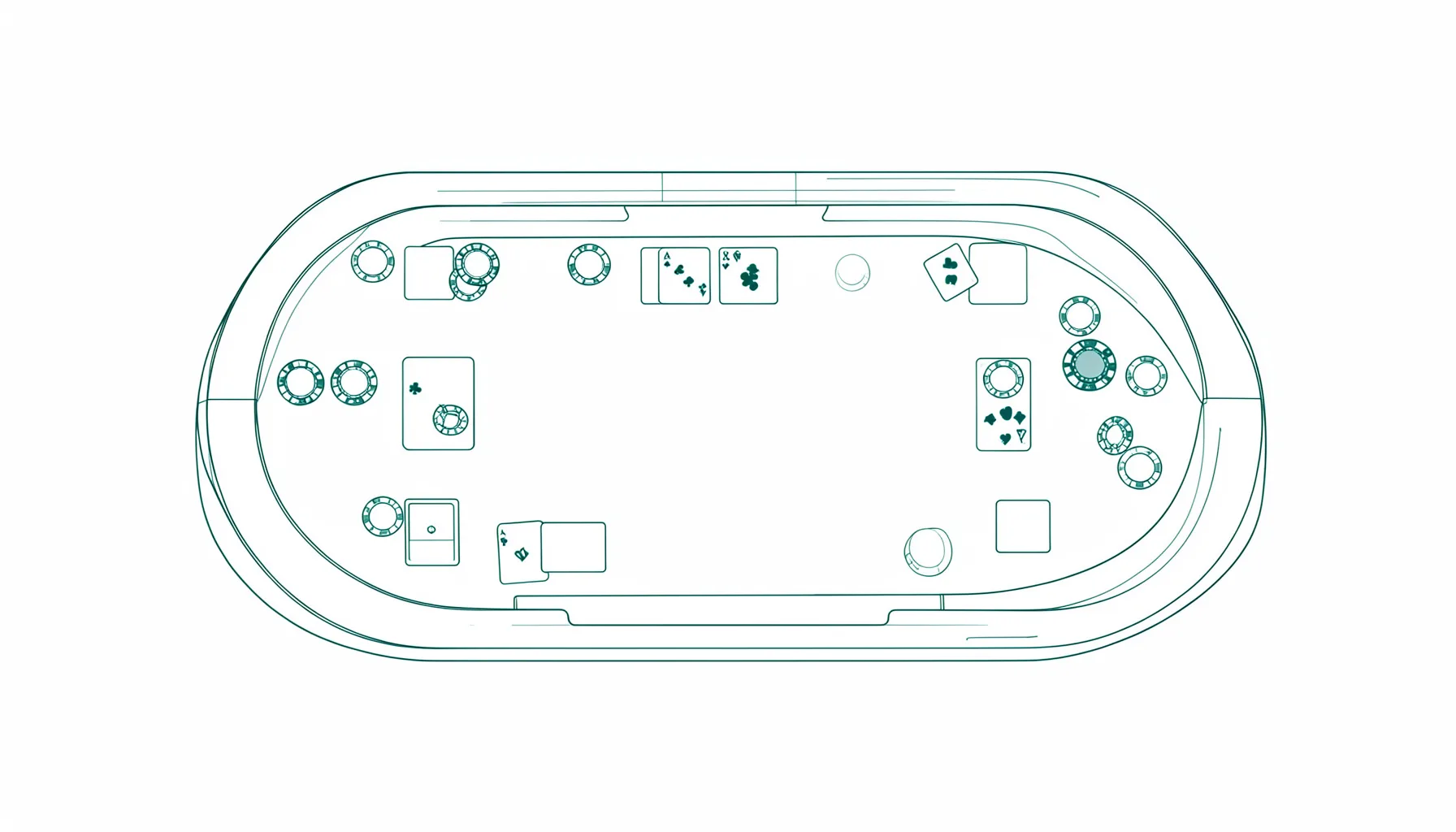
Chip colours are not universal: red can represent one value at one table and another value at the next. Use the denomination selector, hover labels and last-bet panel instead of judging value by colour. The camera may show a physical betting layout with real chips while the player uses an overlay; some interfaces rely almost entirely on the digital grid.
The rules panel should state the minimum stake, maximum stake and any special ceiling for a particular position. Check whether the limit applies to each wager or to the total riding on one spin. Australian players may see balances in AUD, but an offshore table may convert from another currency, making the displayed stake and withdrawal threshold worth checking before committing funds.
Many live interfaces allow several positions to be covered at once. That can look like one large bet while remaining several separate wagers, each subject to its own limit. The undo, clear and rebet controls should be visible, and the final confirmation should identify every covered number before the dealer closes the round.
Following the dealer and live feed
Watch one complete round before staking. The dealer should confirm bets, close the table at a clearly announced point, spin the wheel and award winning chips. A countdown or visual betting grid can make this sequence easier to follow, but the audio call remains the final cue. Once no more bets is announced, a late click may be rejected.
A live feed can show a physical betting layout while the player places bets through an overlay. The wheel and result graphics must stay in sync, especially on a phone. Roulette rounds often move at a measured pace, unlike the rapid decisions of blackjack. A live blackjack comparison can illustrate how player-choice games differ from roulette’s largely preset wagers.
Mobile use is routine across Australia, but connection quality deserves attention. A commuter in Sydney or Melbourne may move between stable mobile data, patchy underground coverage and home Wi-Fi, while a session in Brisbane or Perth can face different latency patterns. International studios may also use their own clock, so an Australian evening can coincide with daytime in Europe and overnight in North America.
Confirming Australian rules and operator status
Legal access and table quality are separate checks. The ACMA regulates online gambling under the federal Interactive Gambling Act 2001, while state and territory regulators apply additional requirements. NSW and Victoria oversee substantial gambling markets, and authorised online providers must follow the licensing pathway for the jurisdiction in which they offer services. Players must be at least 18.
Most prominent casinos in Sydney, Melbourne, Brisbane and Perth remain land-based businesses, while live dealer studios are commonly reached through Australian-authorised offshore operators. The ACMA identifies and blocks some prohibited overseas services, so a polished site should state its licence details, legal entities and responsible-gambling contacts rather than relying on a flag or a persuasive design.
Cross-border checks can also trace a company through the issuing jurisdiction’s public records. One searchable example is official legal information, although a record there does not by itself authorise an operator to serve Australian customers. Before depositing, check the rules, withdrawal terms, identity requirements, dispute process and available account controls, then set a time and cash limit that suits the session. Clear rules, stable technology, lawful access and firm session limits are the foundation of a controlled live-roulette experience.