Live dealer randomness and the myths that persist
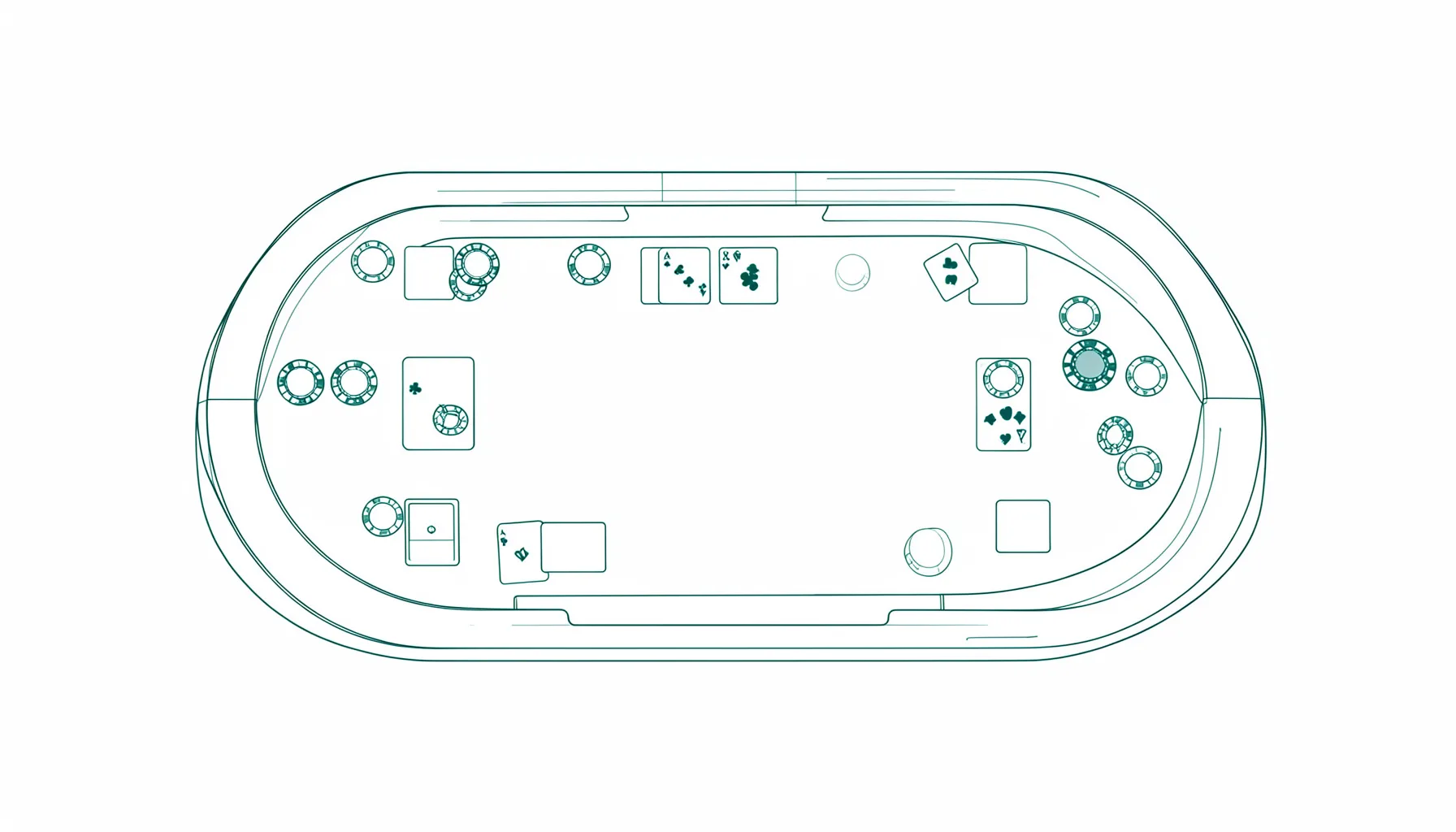
The most common misconceptions about live dealer randomness tend to start with the idea that a real dealer makes each outcome less random. In practice, the dealer follows a procedure for shuffling, dealing or turning the wheel. Randomness comes from that procedure, while the dealer controls the presentation and confirms the rules. A person at the table does not secretly choose the winning card.
Randomness does not mean that every outcome is equally likely. A roulette number has one chance in 37 on a single-zero wheel, while an even-money wager covers 18 of them. Likewise, cards removed from a shoe alter the probabilities of later cards. What matters is that the result is not knowable beforehand and that the process gives each permitted outcome its stated probability.
For Australian players, the language often sounds familiar: a small bet is a punt, and trying to recover earlier losses is chasing them. Live tables also compete with licensed venues in Sydney and Melbourne, where staff, table limits and game rules may differ. An online live dealer product should therefore be judged on its own rules, technology and legal status, rather than treated as a digital copy of a local casino.
The useful distinction is between the person running the table, the technology carrying the picture and the mathematical process producing the result. Keeping those roles separate removes much of the mystery. It also clarifies why a game can be random yet still carry a house advantage, and why confidence in the dealer is not evidence of a winning system.
Why a dealer does not choose the outcome
In physical blackjack, baccarat and roulette, the result is generated by cards, a shoe or a wheel. Shuffling aims to produce an order that cannot be predicted in advance, while procedures for cutting, dealing and handling the wheel standardise the game. The dealer’s movements are visible because transparency matters, not because personal judgement determines the sequence.
Dealer decisions can still affect strategy. In blackjack, choosing whether to hit, stand or split changes the chance of beating the dealer, but it cannot change the order already shuffled into the shoe. Likewise, a roulette result is fixed once the ball settles. Player skill matters; arbitrary control of randomness is a different claim.
For background on how tables are presented, descriptions of live dealer formats help distinguish the studio role from the underlying game procedure.
Live video is not the randomiser
The camera is an observer, not the randomiser. It records the wheel, shoe or card already dealt, while software supplies information overlays and the connection carries video and audio. A brief delay may affect conversation or make the pace feel uneven, yet it cannot change a result that has already been produced. Network quality affects the experience, not the mathematical odds of the wager.
Game-show tables require closer reading. Some formats use a physical wheel or revealed outcome card, while others draw from a software random-number generator. The rules should identify the mechanism and its published odds. A live dealer studio can look identical in both cases, which is why appearance alone cannot settle questions about fairness.
Streaks do not reveal a hidden pattern
A run of red numbers does not make the next spin more likely to be black. On a fair wheel, each spin starts with the same distribution, so past results provide no useful forecast of the next one. This is the familiar independence-of-trials principle. Human attention naturally seeks sequences, especially after a noticeable streak, and can mistake attention for statistical signal.
Card games need more precision. Because cards are removed rather than replaced, the next card’s probability can change, and the composition of an undealt shoe can matter in some blackjack games. That does not turn visible streaks into a simple prediction formula. Disciplined card counting is a separate exercise in probability; a guess based on the last few results is not.
A physical wheel can also have tiny manufacturing imperfections, so theoretical fairness and perfect physical symmetry are not always identical. Such effects are usually too small to turn ordinary pattern spotting into a dependable edge. More importantly, a longer history does not create certainty about the next event.
House edge is built into the rules
A house edge is not a hidden adjustment made against one player. It is the mathematical advantage created by rules such as the zero on roulette, the banker commission in baccarat, or the payout and surrender conditions in blackjack. Online and land-based versions may use different rule sets, so the edge must be calculated from the actual table, not from the name of the game. Advertised return-to-player figures describe long-run performance, not a promised session result.
That advantage describes expected loss over many wagers, not the result of the next session. A staking system may alter bet sizes, but it cannot remove the underlying odds. This is where Australian punters can get into trouble: a losing run encourages chasing, while a winning run encourages a stake to rise too quickly. Neither reaction changes the next probability.
Readers looking for wider background on casino odds can also consult this broader casino reference, while keeping the individual table rules in view.
What makes a credible live game
Credibility comes from evidence rather than a convincing dealer or an attractive studio. Useful checks include published payout tables, clear limits, documented procedures for shuffles and shoe changes, and independent testing of software random-number generators. Physical games may be checked through table inspection and recorded procedures. These controls support confidence without claiming that one observation proves every result.
In Australia, the legal check matters as well. The Interactive Gambling Act 2001 prohibits certain online casino services, and ACMA can block websites offering them. A site that accepts Australian dollars is not automatically authorised for the local market. A live table at a licensed venue in Melbourne or Sydney sits within a different regulatory framework from an offshore website.
Technical preparation is equally practical. A steady broadband or mobile connection matters more than a large television, and players in regional NSW will recognise the term black spot for weak mobile coverage. A stable connection protects the flow of play and lets the dealer interaction remain clear, although it cannot improve the game’s random outcome. Checking access before depositing avoids needless frustration.
Practical habits for Australian live tables
The best response to uncertainty is a clear process rather than a secret signal. Learn the variant before joining, check its published payouts, and understand how quickly the table moves. Blackjack can vary in deck count and payout, roulette in wheel layout, and baccarat in commission and drawing rules. Familiarity reduces confusion; it does not alter chance.
- Check the current Australian restrictions and the operator’s terms before depositing, especially if the site is offshore.
- Read the table’s limits, payouts and bonus conditions before placing a wager.
- Decide on a cash and time limit before the first punt, especially if you are tempted to chase a loss.
- Treat each result as a new calculation from the current rules, rather than a continuation of the last visible pattern.
- Use a stable connection and leave if the stream repeatedly freezes; rushing does not repair a technical fault.
No streak, dealer mannerism or broadcast delay supplies a dependable advantage. What matters is the published rule set, the integrity of the random process and the limits a player sets. In Australia, Gambling Help on 1800 858 158 offers free, confidential support for anyone whose gambling becomes difficult to control. Fair play rests on transparent odds and realistic expectations, not on believing that the next outcome is due.