Why Live Baccarat Is Called the Simplest Casino Game
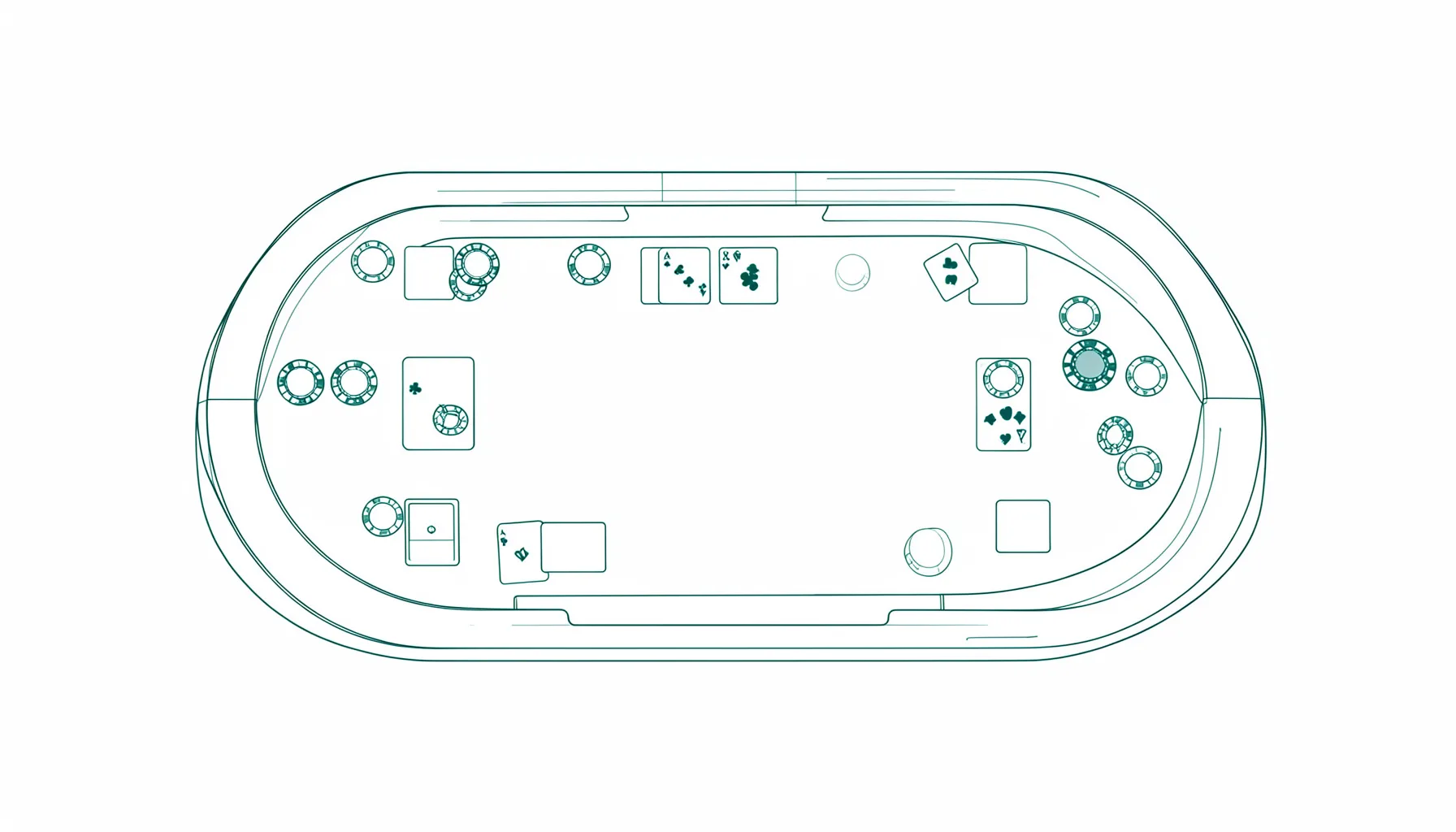
Live baccarat is often praised for its straightforward format: a punter chooses Player, Banker or Tie, and the dealer handles the rest under fixed rules. This is why live baccarat is often called the simplest casino game. It offers fewer strategic choices than blackjack and no number-picking decisions like roulette, while retaining the social rhythm of a real table.
Simplicity should not be confused with an easy way to win. House edge, side-bet traps, connection quality and bankroll limits still matter. Australian players also need to account for state rules, age checks and the difference between local club products and offshore live-dealer websites.
The Rules Fit in a Few Sentences
Standard baccarat uses six or eight cards from a shoe. Aces count as one, two through nine retain their value, and tens, jacks, queens and kings count as zero. The hand closest to nine wins, so a total such as six beats five.
The dealer deals two cards to Player and two to Banker. If a third card is needed, fixed drawing rules dictate it. A punter does not decide whether to draw, which removes the central hit-or-stand decision found in blackjack.
Main bets are Player, Banker and Tie; Banker commonly carries a five per cent commission, while Tie usually pays 8-to-1. Variants may add side bets, extra-card formats and different commission schedules. Those additions can turn a clean three-choice game into a crowded decision.
Why the Live Format Feels Simple
The live presentation makes the small rule set easy to follow. A dealer handles cards, chips and announcements, while cameras show the shoe, result screens and occasional card close-ups. The action unfolds in a repeating visual sequence, so newcomers can learn without studying a long strategy chart.
A round often lasts under a minute, allowing players to watch several outcomes before making another selection. Independent references such as a baccarat rules guide can help readers understand Player, Banker and Tie terminology before joining a studio.
Fewer decisions can make the game feel calm rather than simplistic. Chat, dealer banter and reactions to a near tie add atmosphere, while result roads offer a record of previous hands. Those displays describe what happened; they do not predict what will happen next.
Technology, Timing and the Dealer
A reliable setup matters more than expensive equipment. A modern phone or computer, a current browser and stable broadband are usually enough, although each studio lists its own requirements. Players using mobile data should prefer a steady 4G or 5G connection over congested public Wi-Fi.
Stream latency is not a betting strategy, but it can affect timing. A wager sent after the deal has begun may be rejected or delayed, especially on an unstable link. Waiting for the betting period to reopen avoids confusion and gives the software time to register the stake.
The dealer remains the centre of the experience. Players can usually ask about the commission, drawing rules or a result, and the studio team may explain game-specific features. In a home in Sydney or Melbourne, that interaction can recreate the familiar ease of speaking to a croupier without travelling to a venue.
Simple Rules, Subtle Odds
The mathematical picture is more nuanced than the interface. On the main wagers, the house edge is roughly a little over one per cent, but it varies slightly by side and commission rule. Tie bets and side bets carry much larger advantages, so their larger-looking payouts are not free value.
Card counting has little practical value in a live-streamed game, and no pattern can remove the house edge. A sensible approach is to select one area, place modest, repeatable stakes and avoid changing direction after a loss. Chasing a result is more likely to expose the bankroll than to correct an earlier decision.
Doubling after every loss does not transform the mathematics and can require a dangerously large stake. Players should decide a session budget before joining, divide it into small units and stop when the time or money limit arrives. Simplicity in the rules is useful only when paired with disciplined limits.
Australian Realities and Local Rules
Australian language makes baccarat easy to discuss informally: to place a wager is to punt, and a modest stake may be described as a few bucks. An arvo session can fit around work, while an evening game may last longer. Stakes are usually displayed in Australian dollars, but minimums and chip denominations vary by operator.
The local market is fragmented by state. Pubs and RSL clubs across New South Wales, Queensland, Victoria and other states run approved gaming products, yet a live-dealer stream is a separate offering and is not available through every club. Residents must be 18 or older, expect identification checks and confirm the rules with the relevant state gaming authority.
Players comparing libraries can review a mobile slot catalogue to judge how a platform organises games on a phone before checking its live tables. Offshore pages may describe international studios or broader lobbies, but local licensing remains the deciding factor; ACMA and state regulators provide the authoritative checks for access and consumer protection.
A Sensible First Session
A first live-baccarat session works best when the aim is understanding the rhythm rather than testing a system. Keep the feature set simple, choose a clearly labelled side and avoid side bets until the main round is familiar.
- Verify the operator’s local permissions and complete all age and identity checks.
- Read the stated commission, drawing rules, minimum stake and available betting periods.
- Set deposit, loss and time limits before the first wager, keeping essential household money separate.
- Check the connection, join before betting closes and avoid rushed decisions when the stream is unstable.
- Watch several rounds at the lowest comfortable stake and use the chat function to clarify unfamiliar features.
Pacing also helps. Waiting through a few hands shows how quickly the shoe changes and how often optional features appear. If a stream stutters, a rule is unclear or the limit feels uncomfortable, leaving the session is a valid bankroll decision.
A quick side-by-side view clarifies where baccarat’s simplicity sits.
| Feature |
Live baccarat |
Live blackjack |
Live roulette |
| Core choice |
Player, Banker or Tie |
Hit, stand, split or double |
Number, colour, odd or even, dozens |
| Decision pressure |
Low after the wager is placed |
Moderate to high |
Low after the chip area is chosen |
| Skill influence |
Very limited |
Basic strategy affects results |
Almost none for standard bets |
| Round pace |
Often under one minute |
Varies with player decisions |
Usually quick between spins |
| Main caution |
Side bets and commission |
Incorrect basic strategy |
High house edge on many wagers |
Baccarat’s enduring attraction comes from transparent rules, short rounds and live human interaction.